
The Correct Sleep Profile
The wrong pillow can be a real pain
in the neck—not to mention a barrier to a good
night’s sleep. So find the right fit.




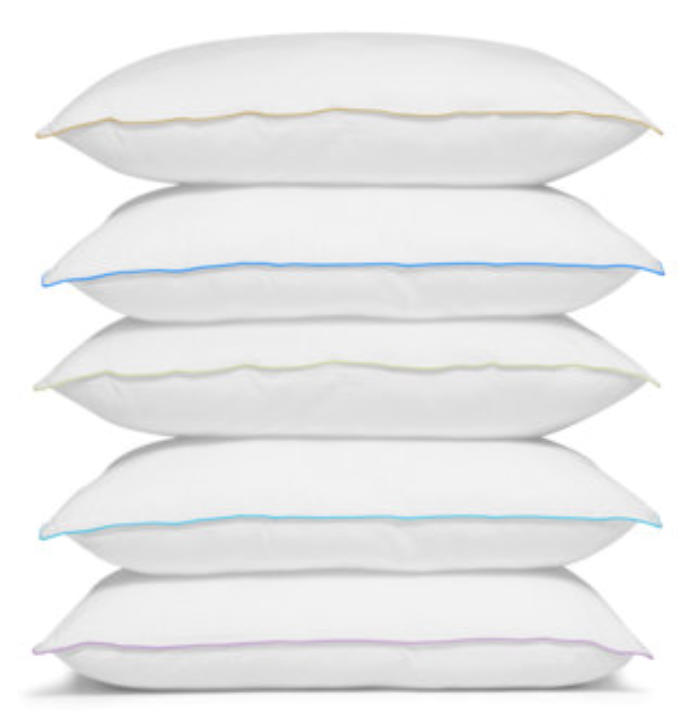
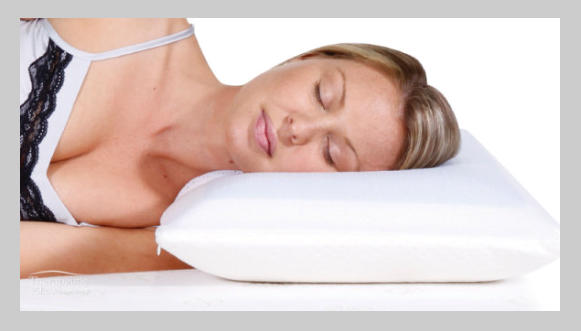
The perfect pillow for sleepers who prefer a non-contour pillow
the classic shape in most cases be the preferred sleeping option.
As such, look for genuine open cell Memory Foam a classic shaped
pillow to suit anyone desiring a flat non-contour pillow with the added
bonus of open cell for cooling purposes.
If
you
experience
neck
pain
—
especially
when
you
sleep
—
you
may
want
to
consider
changing
your
sleeping
position,
as
it
could
make
a
major
difference.
Research
shows
that
sleeping
on
your
stomach can lead to pain in the morning.
“The
best
sleeping
position
to
avoid
neck
pain
is
on
your
side
or
on
your
back,”
says
Dr.
Alissia
Zenhausern,
NMD
physician
at
NMD
Wellness
of
Scottsdale.
That
said,
sleep
position
isn’t
the
only
thing
that
will
solve
your
cervical
woes.
In
addition
to
sleep
position,
a
high-quality
pillow
that
supports
your
neck while you sleep can help.
As
far
as
the
best
pillows
for
neck
pain
are
concerned,
Zenhausern
suggests
“a
more
rounded
pillow
to
help
support
the
natural
curvature
of
your
spine,”
as
well
as
pillows
made
of memory foam.
“Memory
foam
pillows
provide
great
support
for
the neck.”

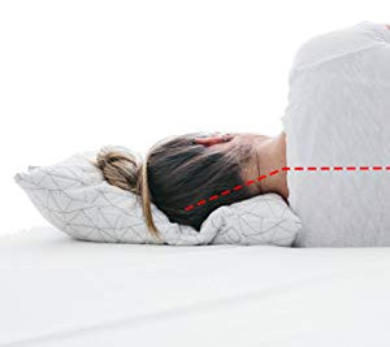
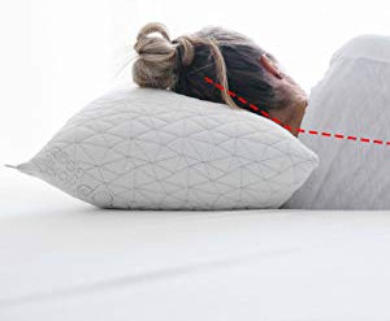
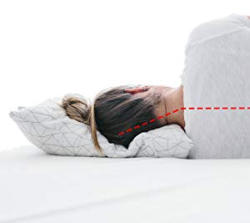
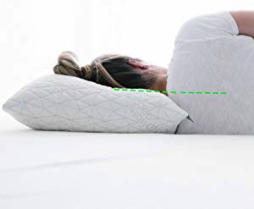
A good sleeping posture is key to sleeping soundly, night after night, and to waking without pain
and stiffness. Your pillow helps to support a healthy sleep posture. What does that posture look
like? A body in alignment, from the knees and hips, through the spine to the chest and shoulders,
head and neck.
If your neck and shoulders don’t get sufficient support or are propped at an angle that causes
twisting, craning, or crunching, this puts your spine and body out of alignment, leading strain and
discomfort in your neck, shoulders, and back, as well as sleeplessness.
As with your mattress, comfort and support are both important in selecting the right pillow. The
best pillow for you is one that feels comfortable to rest your head on, and supports your head,
neck, and shoulders and matches your mattress.
There are several factors that go into choosing a pillow, so let’s do some pillow talk.
When is it time to replace your pillow?
As a general rule, bed pillows need to be replaced after 18 months. Memory foam pillows typically
last longer, up to five years. Natural pillows tend to last longer than synthetic pillows. And higher
quality pillows will last longer than inexpensive ones. If you’re using a pillow that’s five or six years
old, you’re not getting the support you need—and you’re not sleeping as comfortably as you could.
It may seem like a short life, but think about it: your pillow gets used about seven to eight hours a
night—that’s more than 2,500 hours a year! Like your mattress, your pillow is an investment in
high-quality sleep, which pays dividends across your waking life.
If you’re not sure whether your pillow has life left in it or not, you can do some simple tests:
First, take off the pillowcase and over, and examine your pillow. Does it have stains from sweat? Is
it torn? Does it smell? These are all signs of a pillow that needs replacing. Pillows collect dead skin
cells, mildew, mold, fungus, and dust mites (as well as their feces). Over time, as much as half the
weight of a pillow can be attributed to these unwelcome organisms, which can trigger allergies,
interfere with breathing during sleep, and put out odors that make it harder to sleep well.
If your pillow passes the sight and smell test, it’s time to do the fold test:
Fold your pillow in half. If it just lies there folded, rather than springing back to its original shape,
that is a dead pillow. With natural fill pillows, you can do this test over your arm. Does your pillow
drape and hang down over your extended arm? That’s a pillow that’s exhausted its useful life.
With synthetic pillows, fold in half and add some weight to the top; a sneaker or shoe works well.
Take the weight away, and if your pillow doesn’t spring back to its original shape, it’s time for a
replacement.
With large, king-size pillows, whether natural or synthetic, you’ll want to fold into
thirds, rather than in half.
Your Pick-a-Pillow guide
Selecting a pillow is a very individual process. When it comes to picking the right pillow, there really
is no one pillow-size, shape, or material that fits all. The best way to find the pillow that’s right for
you is to determine your individual criteria, use your instinct about what feels most comfortable
and appropriate for you.
If You're a Back Sleeper: You may benefit from a thinner pillow (so your neck is not thrown too far
forward) that has an extra loft in the bottom third to help cradle your neck. (Loft just means how
much lift the pillow has, so having extra loft at the bottom means it will be a little thicker in this
area.) Memory foam is a good option, because it moulds to the shape of your head and neck, it
offers all-over consistent support. Also, try sleeping with another pillow under your knees to
alleviate pressure on your lower back.
If You're a Stomach Sleeper: You could use the thinnest type of pillow—or even no pillow at all.
Sleeping on your stomach puts lots of stress on your lower back, so try sleeping on your side
instead and hugging a body pillow if you like the feeling of something pressing against your
stomach.
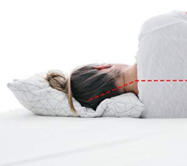
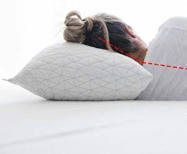
If You're a Side Sleeper: choose a pillow according to your weight, super soft, soft gentle or firm a
pillow that helps bridge the distance between your ear and shoulder. You might also sleep with a
pillow between your knees to better align your spine.


Pillows



Even though we have taken all the care for accuracy of facts we highly
recommend you see your doctor for professional advise and diagnosis.
This Website was produced by
CHIROPEDICSA
Bedding company
for your information on the
importance of a good night sleep







The Correct Sleep Profile
The wrong pillow can be a real
pain in the neck—not to mention a
barrier to a good night’s
sleep. So find the right fit.



This Website was produced by
CHIROPEDICSA
Bedding company
for your information on the
importance of a good night sleep
Even though we have taken all the care for accuracy of facts we highly
recommend you see your doctor for professional advise and diagnosis.

If
you
experience
neck
pain
—
especially
when
you
sleep
—
you
may
want
to
consider
changing
your
sleeping
position,
as
it
could
make
a
major
difference.
Research
shows
that
sleeping
on
your
stomach
can
lead
to
pain in the morning.
“The
best
sleeping
position
to
avoid
neck
pain
is
on
your
side
or
on
your
back,”
says
Dr.
Alissia
Zenhausern,
NMD
physician
at
NMD
Wellness
of
Scottsdale.
Pillows
That
said,
sleep
position
isn’t
the
only
thing
that
will
solve
your
cervical
woes.
In
addition
to
sleep
position,
a
high-quality
pillow
that
supports
your
neck
while
you
sleep can help.
As
far
as
the
best
pillows
for
neck
pain
are
concerned,
Zenhausern
suggests
“a
more
rounded
pillow
to
help
support
the
natural
curvature
of
your
spine,”
as
well
as pillows made of memory foam.
“Memory foam pillows provide great support for the neck.”
The perfect pillow for sleepers who prefer a non-contour pillow
the classic shape in most cases be the preferred sleeping option.
As such, look for genuine open cell Memory Foam a classic shaped pillow
to suit anyone desiring a flat non-contour pillow with the added bonus of
open cell for cooling purposes.
A good sleeping posture is key to sleeping soundly, night after night, and to waking
without pain and stiffness. Your pillow helps to support a healthy sleep posture.
What does that posture look like? A body in alignment, from the knees and hips,
through the spine to the chest and shoulders, head and neck.
If your neck and shoulders don’t get sufficient support or are propped at an angle
that causes twisting, craning, or crunching, this puts your spine and body out of
alignment, leading strain and discomfort in your neck, shoulders, and back, as well
as sleeplessness.
As with your mattress, comfort and support are both important in selecting the
right pillow. The best pillow for you is one that feels comfortable to rest your head
on, and supports your head, neck, and shoulders and matches your mattress.
There are several factors that go into choosing a pillow, so let’s do some pillow talk.
When is it time to replace your pillow?
As a general rule, bed pillows need to be replaced after 18 months. Memory foam
pillows typically last longer, up to five years. Natural pillows tend to last longer than
synthetic pillows. And higher quality pillows will last longer than inexpensive ones. If
you’re using a pillow that’s five or six years old, you’re not getting the support you
need—and you’re not sleeping as comfortably as you could.
It may seem like a short life, but think about it: your pillow gets used about seven to
eight hours a night—that’s more than 2,500 hours a year! Like your mattress, your
pillow is an investment in high-quality sleep, which pays dividends across your
waking life.
If you’re not sure whether your pillow has life left in it or not, you can do some
simple tests:
First, take off the pillowcase and over, and examine your pillow. Does it have stains
from sweat? Is it torn? Does it smell? These are all signs of a pillow that needs
replacing. Pillows collect dead skin cells, mildew, mold, fungus, and dust mites (as
well as their feces). Over time, as much as half the weight of a pillow can be
attributed to these unwelcome organisms, which can trigger allergies, interfere with
breathing during sleep, and put out odors that make it harder to sleep well.
If your pillow passes the sight and smell test, it’s time to do the fold test:
Fold your pillow in half. If it just lies there folded, rather than springing back to its
original shape, that is a dead pillow. With natural fill pillows, you can do this test
over your arm. Does your pillow drape and hang down over your extended arm?
That’s a pillow that’s exhausted its useful life.
With synthetic pillows, fold in half and add some weight to the top; a sneaker or
shoe works well. Take the weight away, and if your pillow doesn’t spring back to its
original shape, it’s time for a replacement.
With large, king-size pillows, whether natural or synthetic, you’ll want to fold into
thirds, rather than in half.
Your Pick-a-Pillow guide
Selecting a pillow is a very individual process. When it comes to picking the right
pillow, there really is no one pillow-size, shape, or material that fits all. The best way
to find the pillow that’s right for you is to determine your individual criteria, use
your instinct about what feels most comfortable and appropriate for you.
If You're a Back Sleeper: You may benefit from a thinner pillow (so your neck is not
thrown too far forward) that has an extra loft in the bottom third to help cradle your
neck. (Loft just means how much lift the pillow has, so having extra loft at the
bottom means it will be a little thicker in this area.) Memory foam is a good option,
because it moulds to the shape of your head and neck, it offers all-over consistent
support. Also, try sleeping with another pillow under your knees to alleviate
pressure on your lower back.
If You're a Stomach Sleeper: You could use the thinnest type of pillow—or even no
pillow at all. Sleeping on your stomach puts lots of stress on your lower back, so try
sleeping on your side instead and hugging a body pillow if you like the feeling of
something pressing against your stomach.
If You're a Side Sleeper: choose a pillow according to your weight, super soft, soft
gentle or firm a pillow that helps bridge the distance between your ear and
shoulder. You might also sleep with a pillow between
your knees to better align your spine.







The Correct Sleep Profile
The wrong pillow can be a real
pain in the neck—not to mention a
barrier to a good night’s
sleep. So find the right fit.



This Website was produced by
CHIROPEDICSA
Bedding company
for your information on the
importance of a good night sleep
Even though we have taken all the care for accuracy of facts we highly
recommend you see your doctor for professional advise and diagnosis.

If
you
experience
neck
pain
—
especially
when
you
sleep
—
you
may
want
to
consider
changing
your
sleeping
position,
as
it
could
make
a
major
difference.
Research
shows
that
sleeping
on
your
stomach
can
lead
to
pain in the morning.
“The
best
sleeping
position
to
avoid
neck
pain
is
on
your
side
or
on
your
back,”
says
Dr.
Alissia
Zenhausern,
NMD
physician
at
NMD
Wellness
of
Scottsdale.
Pillows
That
said,
sleep
position
isn’t
the
only
thing
that
will
solve
your
cervical
woes.
In
addition
to
sleep
position,
a
high-quality
pillow
that
supports
your
neck
while
you
sleep can help.
As
far
as
the
best
pillows
for
neck
pain
are
concerned,
Zenhausern
suggests
“a
more
rounded
pillow
to
help
support
the
natural
curvature
of
your
spine,”
as
well
as pillows made of memory foam.
“Memory foam pillows provide great support for the neck.”

The perfect pillow for sleepers who prefer a non-contour pillow
the classic shape in most cases be the preferred sleeping option.
As such, look for genuine open cell Memory Foam a classic shaped pillow
to suit anyone desiring a flat non-contour pillow with the added bonus of
open cell for cooling purposes.
A good sleeping posture is key to sleeping soundly, night after night, and to waking
without pain and stiffness. Your pillow helps to support a healthy sleep posture.
What does that posture look like? A body in alignment, from the knees and hips,
through the spine to the chest and shoulders, head and neck.
If your neck and shoulders don’t get sufficient support or are propped at an angle
that causes twisting, craning, or crunching, this puts your spine and body out of
alignment, leading strain and discomfort in your neck, shoulders, and back, as well
as sleeplessness.
As with your mattress, comfort and support are both important in selecting the
right pillow. The best pillow for you is one that feels comfortable to rest your head
on, and supports your head, neck, and shoulders and matches your mattress.
There are several factors that go into choosing a pillow, so let’s do some pillow talk.
When is it time to replace your pillow?
As a general rule, bed pillows need to be replaced after 18 months. Memory foam
pillows typically last longer, up to five years. Natural pillows tend to last longer than
synthetic pillows. And higher quality pillows will last longer than inexpensive ones. If
you’re using a pillow that’s five or six years old, you’re not getting the support you
need—and you’re not sleeping as comfortably as you could.
It may seem like a short life, but think about it: your pillow gets used about seven to
eight hours a night—that’s more than 2,500 hours a year! Like your mattress, your
pillow is an investment in high-quality sleep, which pays dividends across your
waking life.
If you’re not sure whether your pillow has life left in it or not, you can do some
simple tests:
First, take off the pillowcase and over, and examine your pillow. Does it have stains
from sweat? Is it torn? Does it smell? These are all signs of a pillow that needs
replacing. Pillows collect dead skin cells, mildew, mold, fungus, and dust mites (as
well as their feces). Over time, as much as half the weight of a pillow can be
attributed to these unwelcome organisms, which can trigger allergies, interfere with
breathing during sleep, and put out odors that make it harder to sleep well.
If your pillow passes the sight and smell test, it’s time to do the fold test:
Fold your pillow in half. If it just lies there folded, rather than springing back to its
original shape, that is a dead pillow. With natural fill pillows, you can do this test
over your arm. Does your pillow drape and hang down over your extended arm?
That’s a pillow that’s exhausted its useful life.
With synthetic pillows, fold in half and add some weight to the top; a sneaker or
shoe works well. Take the weight away, and if your pillow doesn’t spring back to its
original shape, it’s time for a replacement.
With large, king-size pillows, whether natural or synthetic, you’ll want to fold into
thirds, rather than in half.
Your Pick-a-Pillow guide
Selecting a pillow is a very individual process. When it comes to picking the right
pillow, there really is no one pillow-size, shape, or material that fits all. The best way
to find the pillow that’s right for you is to determine your individual criteria, use
your instinct about what feels most comfortable and appropriate for you.
If You're a Back Sleeper: You may benefit from a thinner pillow (so your neck is not
thrown too far forward) that has an extra loft in the bottom third to help cradle your
neck. (Loft just means how much lift the pillow has, so having extra loft at the
bottom means it will be a little thicker in this area.) Memory foam is a good option,
because it moulds to the shape of your head and neck, it offers all-over consistent
support. Also, try sleeping with another pillow under your knees to alleviate
pressure on your lower back.
If You're a Stomach Sleeper: You could use the thinnest type of pillow—or even no
pillow at all. Sleeping on your stomach puts lots of stress on your lower back, so try
sleeping on your side instead and hugging a body pillow if you like the feeling of
something pressing against your stomach.
If You're a Side Sleeper: choose a pillow according to your weight, super soft, soft
gentle or firm a pillow that helps bridge the distance between your ear and
shoulder. You might also sleep with a pillow between
your knees to better align your spine.